The biggest zoning change California has seen in decades is officially here.
If you've heard people talking about SB 79, you've probably heard everything from "this will solve the housing crisis" to "this will destroy neighborhoods."
As with most things in real estate, the truth is somewhere in the middle.
Here's what SB 79 actually does—and what it could mean if you own, buy, or sell property in San Diego.
First...what is SB 79?
SB 79 is a California law that requires cities to allow significantly more housing near qualifying public transit.
The goal is simple:
Build more homes where people can realistically live without depending entirely on cars.
Instead of expanding farther into undeveloped land, California wants more housing around trolley stations, major bus routes, and other high-frequency transit.
For many cities—including San Diego—that means state law now overrides some local zoning restrictions around transit corridors.
Why was this passed?
California has spent decades building far fewer homes than its population needs.
The result has been:
- Extremely high home prices
- High rents
- Long commutes
- Younger families struggling to buy
- Workers pushed farther away from job centers
The State's position is that local zoning has made it too difficult to build enough housing.
SB 79 is one of several recent laws intended to increase housing production by allowing higher-density development in places that already have transit infrastructure.
What actually changes?
The biggest change is that land near qualifying transit stops can now support much larger residential projects than many neighborhoods previously allowed.
In San Diego, qualifying properties may now allow approximately:
- Up to 55 feet in height within one-half mile of qualifying transit
- Up to 65 feet within one-quarter mile
- Up to 85 feet immediately adjacent to certain qualifying transit stops
Allowable residential density also increases substantially the closer a property is to transit.
That doesn't mean every single-family home will suddenly become an apartment building.
It means the zoning ceiling has changed, creating new opportunities for redevelopment over time.
Where will San Diego feel this most?
Not every neighborhood will be affected equally.
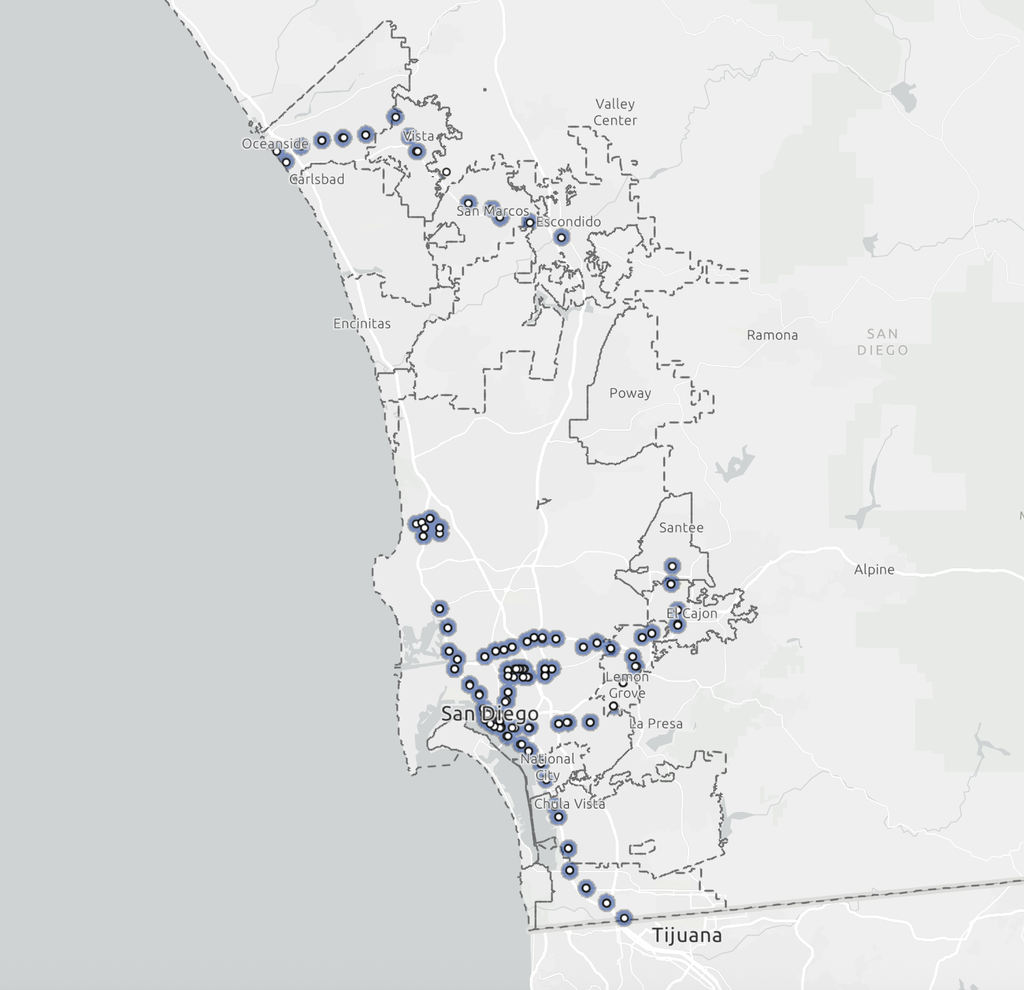
Areas near qualifying trolley stations and certain high-frequency bus corridors will see the biggest changes.
Some areas that could experience increased redevelopment pressure include portions of:
- Mission Valley
- North Park
- University Heights
- Hillcrest
- City Heights
- Mid-City
- Downtown
- Linda Vista
- Clairemont
- Morena
- Parts of Point Loma near major transit corridors
- Portions of Pacific Beach served by qualifying transit
The City of San Diego has published maps showing exactly where SB 79 applies because not every transit stop qualifies.
Who benefits?
That depends on your perspective.
Property owners
Some owners may discover their land is now considerably more valuable—not because of the existing house, but because of what could eventually be built there.
Developers often value land based on redevelopment potential rather than the current improvements.
Buyers
Over time, increased housing supply could create more ownership opportunities and more housing choices, especially for condos, townhomes, and smaller multifamily projects.
Whether it meaningfully improves affordability remains one of the biggest debates surrounding the law.
Developers
Developers likely become the biggest immediate beneficiaries because more properties become economically viable for redevelopment.
What concerns homeowners?
This is where most of the debate happens.
Common concerns include:
- Increased traffic
- Parking shortages
- Neighborhood character changing
- More demolition of older homes
- Additional strain on infrastructure
- School capacity
- Water and sewer systems
Some residents also worry about losing local control over neighborhood planning, since many zoning decisions are now directed by state law rather than individual cities.
Will this immediately change my neighborhood?
Probably not.
Real estate moves much slower than legislation.
Even if redevelopment becomes legally possible, projects still have to make financial sense.
Construction costs remain high.
Interest rates matter.
Land prices matter.
Developers still need financing, permits, and enough demand to justify building.
Many neighborhoods may evolve gradually over the next 10 to 20 years rather than changing overnight.
What opportunities should homeowners watch for?
This is where it gets interesting.
If you own property near qualifying transit, it may be worth asking questions like:
- Has my property's redevelopment potential changed?
- Would a builder pay more than a typical homebuyer?
- Should I remodel—or would that investment never be recovered?
- Is holding the property for several years potentially more valuable than selling today?
These aren't questions every homeowner needs to ask—but they're increasingly important in certain neighborhoods.
My advice
I think SB 79 is one of those laws that's easy to overreact to.
Some people believe every neighborhood is about to become downtown.Others assume nothing will happen. Reality is probably somewhere in between. Certain properties will become dramatically more valuable because of their development potential. Others may see very little practical impact.
The biggest mistake would be assuming your property's value is determined only by the house sitting on it today.
Increasingly, buyers—and especially developers—may be valuing what could be built tomorrow.
If you own property anywhere near a trolley station or major transit corridor, it's worth understanding how SB 79 affects your specific lot before making long-term decisions. Every property is different, and the opportunities can vary significantly from one block to the next.
As always, if you're curious how SB 79 might affect your home's value or redevelopment potential, I'm happy to take a look.
Check out this article next