If you want to own a home near the beach in San Diego, Ocean Beach and Mission Beach will probably both come up in your search.
They're only a few miles apart, and on paper they have a lot in common. Both offer walkability, surfing, restaurants, incredible weather, and the ability to make the beach part of everyday life.
But from a real estate perspective, they're surprisingly different.
Ocean Beach feels like a residential community that happens to be at the beach. Mission Beach feels much more like a beach and vacation community that also has people living there full-time.
That distinction affects everything from the homes you'll find to parking, rental potential, neighborhood atmosphere, and what it's actually like to own property there.
Here's how I'd compare the two.
The Short Version
If you're looking for a primary residence with a strong neighborhood feel, more variety in housing, and a community where you can put down roots, I'd generally lean toward Ocean Beach.
If being steps from the sand, maximizing the classic San Diego beach experience, or owning a property with vacation-rental appeal is the priority, Mission Beach deserves a serious look.
Neither is inherently the better investment or better place to live. They're simply different products.
Ocean Beach: A Beach Town You Can Live In

Ocean Beach has a strong identity that extends well beyond the beach itself.
Newport Avenue gives the neighborhood a real commercial center. There are schools, parks, youth sports, local businesses, restaurants, breweries, and community events. Move a few blocks inland and much of OB becomes surprisingly residential.
That matters if you're buying a primary residence.
You can live close enough to walk or bike to the beach while still having a driveway, a yard, a quieter street, and neighbors who live there year-round.
Go farther into the OB Highlands and the housing changes again. Lots tend to get larger, streets become quieter, and you'll find more traditional single-family homes while remaining only minutes from the ocean.
That variety gives buyers quite a few ways to "live in OB."
Mission Beach: The Beach Is the Main Event
Mission Beach is different.
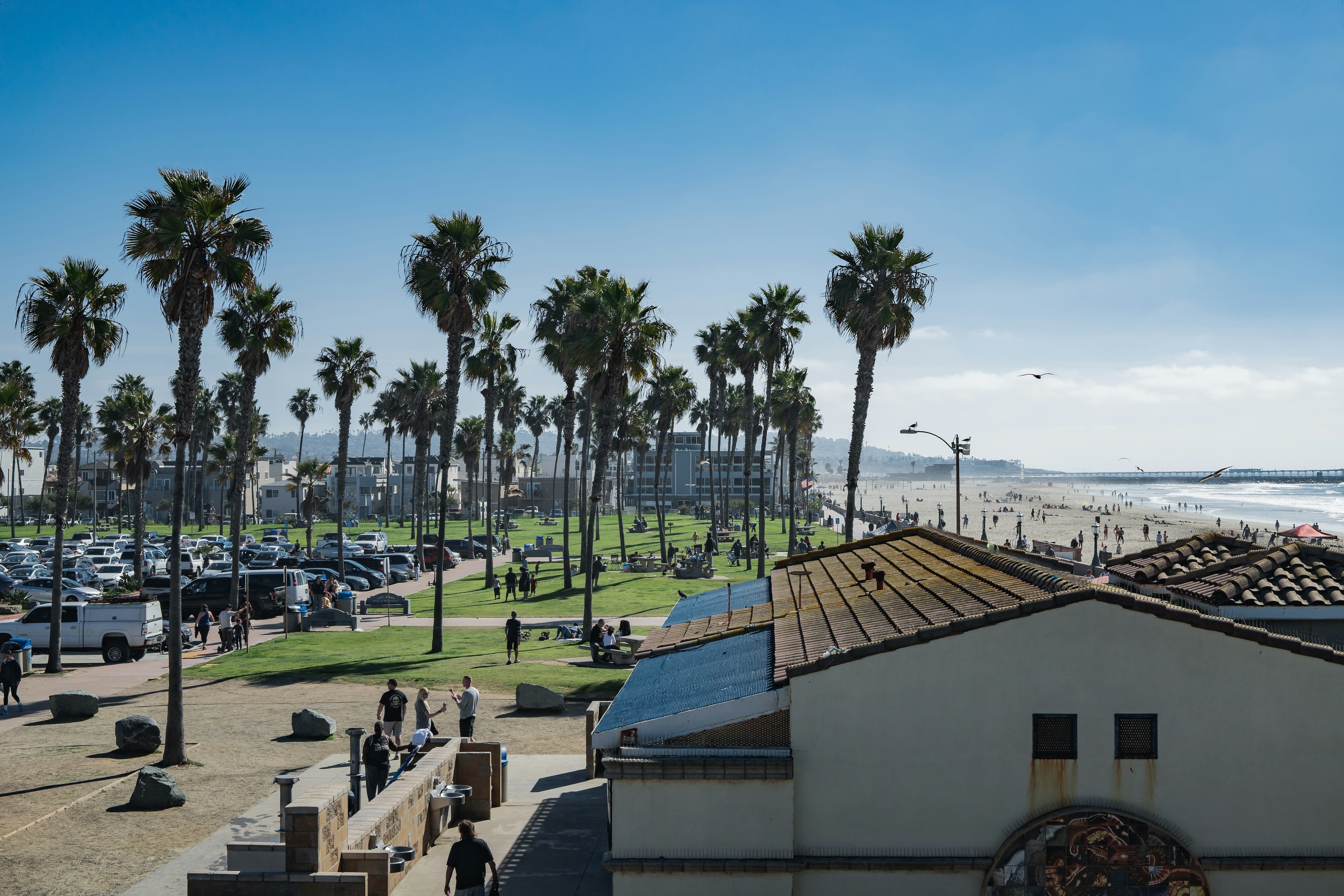
The neighborhood occupies a narrow strip of land between the Pacific Ocean and Mission Bay, so you're almost always remarkably close to water.
That's the appeal.
You have the beach, bay, boardwalk, boating, surfing, volleyball, restaurants, and a constant stream of people enjoying the area.
But that geography also creates some real estate tradeoffs.
Lots are generally tight. Parking can be extremely valuable. Homes sit close together. Outdoor space may be limited, and summer activity can be significant.
For someone who wants the full beach experience, those may be perfectly acceptable compromises.
For someone looking for a quiet traditional neighborhood, they may not be.
The Homes Are Very Different
This may be the biggest real estate distinction.
Ocean Beach has an unusually diverse housing stock. You'll find small beach cottages, Spanish bungalows, condos, mid-century homes, remodeled properties, larger homes in the Highlands, and contemporary view homes.
Lots and floorplans vary considerably.
Mission Beach is constrained by its geography, so land is at a much greater premium. Many properties are built vertically to maximize living space on narrow lots.
You'll see older beach cottages alongside multi-level contemporary homes designed to capture ocean or bay views.
That makes square footage alone a particularly poor way to compare value between the two neighborhoods.
A buyer should be thinking about the land, parking, proximity to the water, views, outdoor space, and intended use of the property.
What Do You Get for Your Money?
This is where Ocean Beach often becomes compelling for a primary-residence buyer.
At comparable price points, OB will frequently give you more of the things associated with conventional homeownership: more lot, more separation from neighboring properties, better parking, a yard, or a more traditional floorplan.
Mission Beach commands a premium for something else: extreme proximity to the beach and bay.
You may get less house or land for your money, but you may be able to walk out your door and be on the sand in a minute.
That's why I don't think "price per square foot" tells the whole story here.
You're buying two different lifestyles.
Walkability Is Excellent in Both—But Different
Both communities can allow you to leave the car parked for much of the weekend.
In Ocean Beach, walkability tends to revolve around the neighborhood. You might walk to school, coffee, the farmers market, dinner, the beach, or a friend's house.
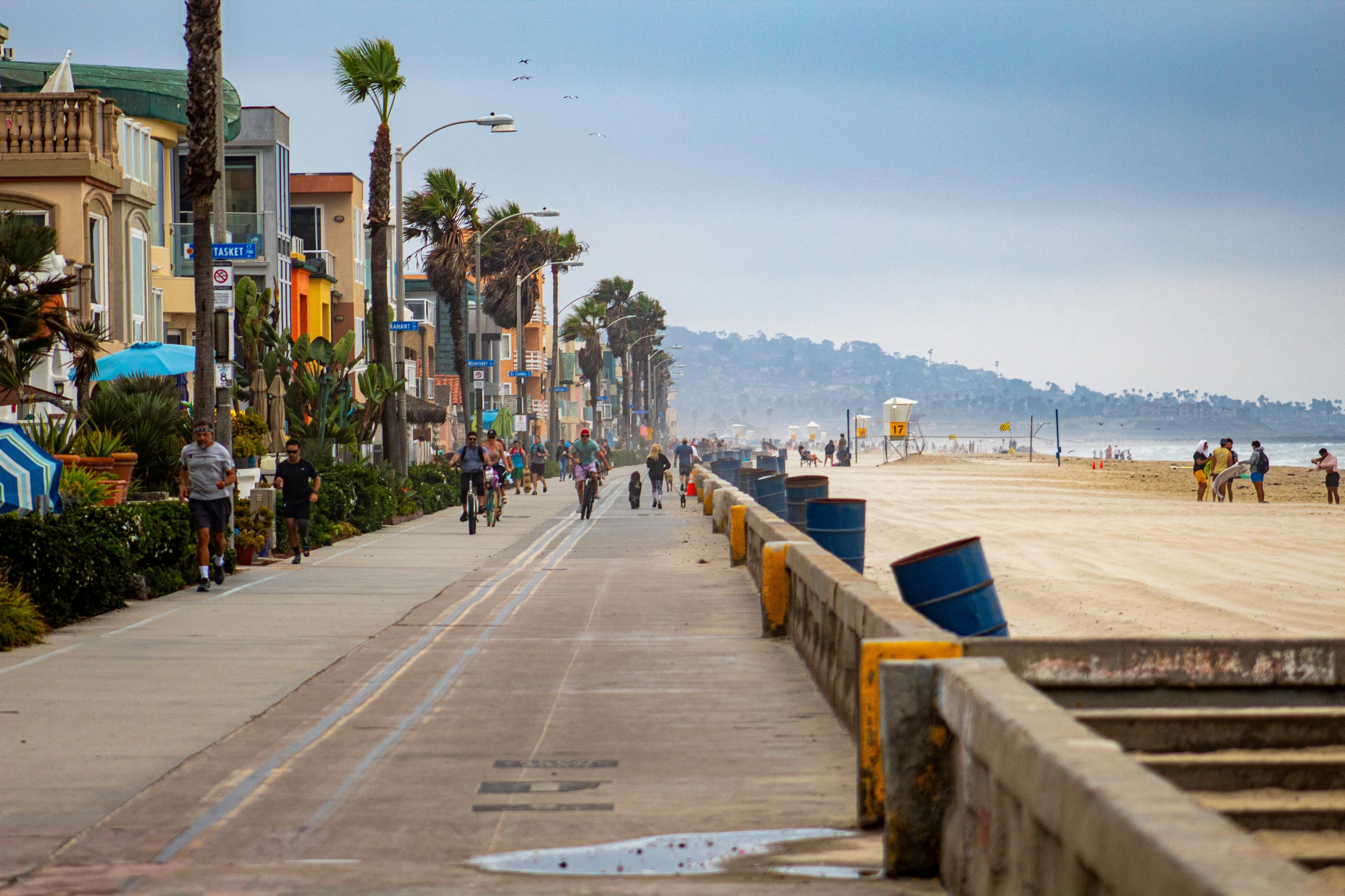
Mission Beach walkability is more recreational. The boardwalk connects you to the beach, restaurants, Belmont Park, and neighboring Pacific Beach, while the bay is just a few blocks—or sometimes only a few houses—in the other direction.
OB feels more like walking around your hometown.
Mission Beach can feel more like living inside your vacation.
Depending on what you're looking for, either one can be pretty great.
What About Short-Term Rentals?
This is an important difference for anyone considering a property as an investment or second home.
Mission Beach has historically had a much larger concentration of vacation rentals, and the City of San Diego treats whole-home short-term rentals in Mission Beach differently under its Short-Term Residential Occupancy licensing system.
Ocean Beach also has short-term rentals, but the overall housing environment remains more residential.
If rental income is a significant part of your purchase decision, don't assume that buying near the beach automatically means you'll be able to operate a vacation rental. Licensing, property rules, HOA restrictions, and current city regulations all need to be verified before purchasing.
For an investor, that due diligence can be just as important as evaluating the property itself.
Which Is Better for a Primary Residence?
For most buyers looking for a full-time home, I think Ocean Beach offers more flexibility.
You can choose how immersed in the beach scene you want to be.
Live near Newport and you're right in it.
Move toward the Highlands and life becomes considerably quieter.
You can find homes with yards, garages, larger lots, and more separation while still maintaining the coastal lifestyle.
Mission Beach can absolutely work as a primary residence—and plenty of people love living there—but you need to genuinely want the density and activity that come with the location.
I'd spend time there during a busy summer weekend before making that decision.
Which Is Better for a Second Home?
This is where Mission Beach becomes particularly interesting.
If your goal is to have a San Diego property where you can arrive for the weekend, park the car, walk to the sand, ride bikes along the boardwalk, and spend the entire trip near the water, it's difficult to beat.
Ocean Beach can certainly work as a second home too, particularly if you prefer a stronger neighborhood environment.
The question is whether you want your second home to feel like a home near the beach or a beach house.
That's a subtle distinction, but it's a useful one.
Which Has Better Long-Term Value?
I wouldn't choose between these neighborhoods based on a prediction that one is going to appreciate faster than the other.
Both benefit from something extremely difficult to reproduce: very limited land next to the Pacific Ocean.
But the factors driving demand aren't identical.
Mission Beach has extraordinary scarcity because of its narrow geography and proximity to both the ocean and bay.
Ocean Beach combines coastal scarcity with a broader residential community, larger variety of homes, and strong demand from people looking for primary residences.
Within either neighborhood, the quality of the individual property can matter more than the neighborhood average.
A great lot, parking, views, condition, location within the neighborhood, and future potential can dramatically affect long-term value.
Don't Underestimate Parking
This deserves its own section.
If you're moving from somewhere inland, parking may feel like a minor detail when you're touring homes.
It won't feel minor after you've lived at the beach for six months.
Off-street parking is valuable in Ocean Beach.
In Mission Beach, it can be absolutely critical.
When comparing properties, I would consider a garage or dedicated parking space part of the real estate—not just a convenience.
The same goes for storage. Surfboards, bikes, beach gear, paddleboards, and everything else that comes with coastal living have to go somewhere.
These practical details can have an outsized impact on how much you enjoy the home.
My Advice: Experience Both Like a Resident
If you're seriously considering Ocean Beach and Mission Beach, don't make the decision from listing photos.
Spend a normal day in each.
Walk the residential streets, not just the beach.
Try parking.
Grab groceries.
Go out for dinner.
Visit in the morning and again in the evening.
And if possible, experience Mission Beach on a busy summer weekend.
You're trying to answer a much more important question than which neighborhood photographs better:
Which place feels like somewhere I'd actually want to come home to every day?
Summing it up.
Ocean Beach and Mission Beach offer two very different versions of San Diego beach living.
Mission Beach puts the beach experience front and center. The ocean and bay are always close, the boardwalk is part of daily life, and there's an energy that's difficult to replicate anywhere else.
Ocean Beach gives you more separation between the beach and home while maintaining a strong connection to both. It offers more housing variety, a deeper year-round neighborhood feel, and the ability to choose between highly walkable beach living and quieter residential streets.
If I were helping a buyer decide between the two, I wouldn't start with price.
I'd start with lifestyle.
Figure out how you want to live, how you'll use the property, and what tradeoffs you're willing to make.
Once you know that, the real estate decision usually gets a lot easier.
Read about why I chose to live in Ocean Beach.
Check out this article next